


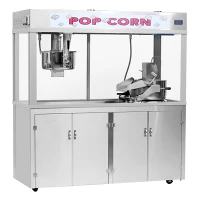
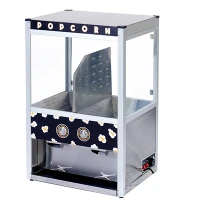
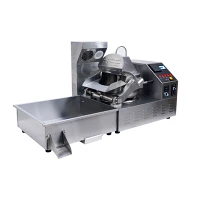

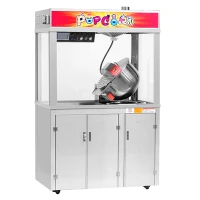
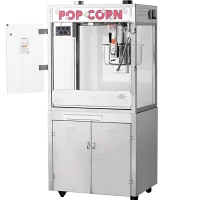

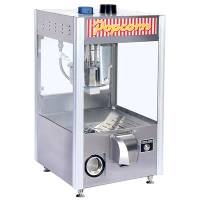
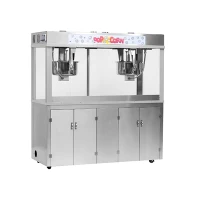
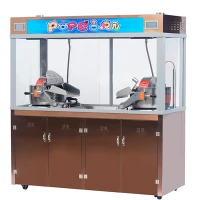


Commercial popcorn machines are widely used in cinemas, shopping malls, concession stands, restaurants, amusement parks, and other foodservice businesses. For manufacturers, distributors, and importers, entering the U.S. or European market requires more than producing a reliable machine.
Understanding the applicable product safety standards, food contact regulations, and certification requirements is equally important.
So, what certifications does a commercial popcorn machine need in the USA and EU?
1. U.S. Market: Key Certifications and Compliance Requirements
In the United States, commercial popcorn machines must meet applicable product safety and food safety requirements. Electrical safety certification and food equipment sanitation certification are two important areas to consider.
1.1 UL or ETL Certification: Electrical Safety
UL and ETL are two widely recognized marks for electrical product safety in the U.S. market.
Commercial popcorn machines typically include electrical heating elements, motors, lighting, switches, thermostats, and other electrical components. These parts must be designed and tested to reduce risks such as electric shock, overheating, fire, and electrical failure.
- UL Certification: Products are evaluated against applicable safety standards by UL Solutions.
- ETL Certification: Intertek evaluates products against applicable safety standards. An ETL Listed mark indicates that the product has been tested and certified under the relevant program
For commercial popcorn machines, the applicable standard may include UL 197, Commercial Electric Cooking Appliances, depending on the product design and intended use.
It is important to note that UL and ETL are certification options rather than two separate certifications that every machine must obtain. The appropriate route depends on the product, applicable standards, customer specifications, and local authority requirements.
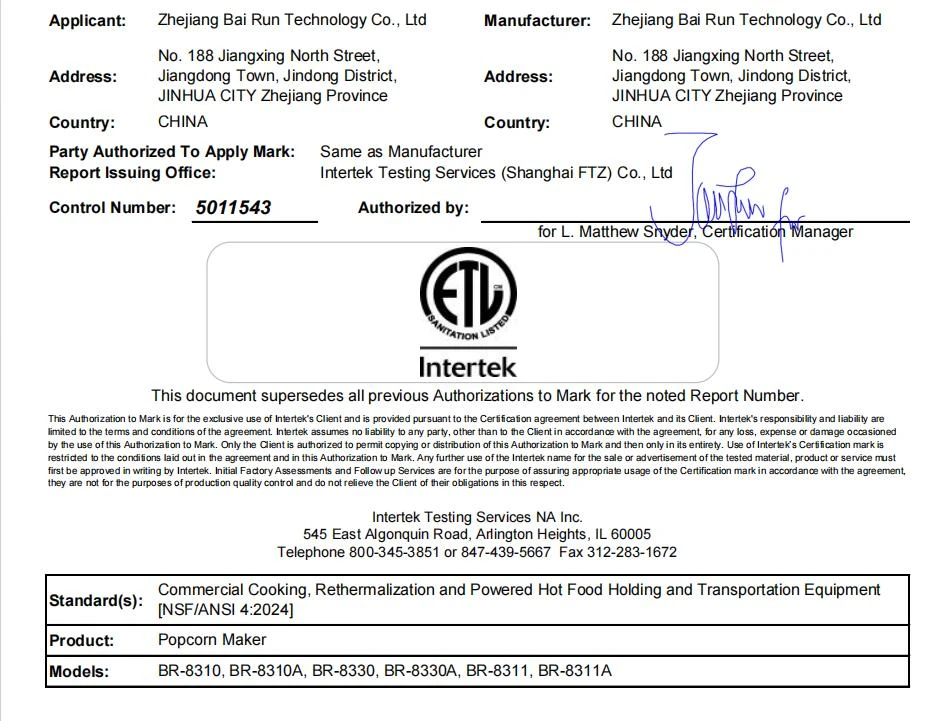
Why does this matter?
Electrical safety certification can help manufacturers demonstrate product safety, build buyer confidence, and facilitate acceptance by commercial customers and authorities having jurisdiction.
1.2 NSF Certification: Food Equipment Sanitation
NSF certification is an important consideration for commercial foodservice equipment in the United States.
Unlike electrical safety certification, NSF certification focuses on hygienic design, cleanability, material safety, and other sanitation-related requirements.
For popcorn machines, relevant considerations may include:
- Food-contact surfaces that are safe for their intended use.
- Smooth surfaces and accessible components that facilitate cleaning.
- Construction that minimizes the accumulation of food residue.
- Materials that withstand expected operating temperatures and cleaning procedures.
- Applicable NSF/ANSI standards should be selected according to the equipment's design and intended function.
NSF certification is not a universal federal requirement for every commercial popcorn machine. However, local health codes, inspection authorities, commercial kitchen operators, and purchasing specifications may require or favor equipment certified to relevant sanitation standards.
Manufacturers should therefore confirm requirements with their importers, customers, and local authorities before choosing a certification program.
1.3 FDA Food Contact Compliance: Materials That Touch Food
The U.S. Food and Drug Administration (FDA) regulates food-contact substances and materials under applicable federal requirements.
For commercial popcorn machines, materials that contact popcorn or other food ingredients may include stainless steel surfaces, metal kettles, scoops, coatings, and certain plastic components.
Depending on the material and intended use, applicable requirements may include relevant provisions of Title 21 of the Code of Federal Regulations (21 CFR).
Manufacturers should verify that food-contact materials are suitable for their intended conditions of use, including temperature, food type, and duration of contact.
An important distinction: FDA compliance is not the same as receiving a general FDA certificate for an entire popcorn machine. Compliance must be assessed based on the applicable requirements for the materials and components involved.
Supporting documentation may include material specifications, supplier declarations, and relevant test reports.
1.4 Other U.S. Requirements to Consider
Depending on the product configuration and sales territory, manufacturers may also need to assess:
- FCC requirements: Relevant when the equipment incorporates electronic circuitry or radio-frequency-emitting components that fall within applicable FCC rules.
- California Proposition 65: May require warnings if a product exposes consumers to listed chemicals above applicable thresholds, subject to relevant exemptions.
- Local installation and fire safety requirements: Installation conditions, electrical codes, ventilation, and fire protection requirements may apply depending on the equipment and location.
These requirements are not automatically applicable to every popcorn machine. A product-specific compliance review is the best starting point.